
Call us now :07313726422
 Send Inquiry
 Send Inquiry
Defoamer Chemicals
Defoamer Chemicals Specification
- Shape
- Liquid
- Taste
- Odorless
- Purity
- 99%
- Appearance
- Milky white viscous liquid
- Poisonous
- NO
- Solubility
- Dispersible in water
- Physical Form
- Liquid
- CAS No
- 9003-11-6
- Application
- Paper processing, effluent treatments, fermentation, textile, paints and coatings, detergents
- Ph Level
- 6.58.5
- Smell
- Mild, characteristic
- Shelf Life
- 12 months
- Molecular Weight
- Variable
- Grade
- Industrial Grade
- EINECS No
- 618-466-4
- Product Type
- Chemical Compound
- HS Code
- 38249022
- Melting Point
- -50C to -40C
- Molecular Formula
- (C2H6OSi)n
- Ingredients
- Polydimethylsiloxane, emulsifiers, carrier fluid
- Density
- 1.0 Gram per cubic centimeter(g/cm3)
- Refractive Rate
- 1.402
- Structural Formula
- -[-Si(CH3)2O-]n-
- Storage
- Store in tightly closed original container, at room temperature, away from direct sunlight
- Usage
- Used to suppress and eliminate foam in industrial processes
- Properties
- Excellent foam control, stable under alkaline and acidic conditions, low viscosity, disperses easily in water
- Packing Type
- HDPE drums
- Viscosity
- 500-1000 cps
- Compatibility
- Compatible with most process chemicals
- Flash Point
- >100C
- Boiling Point
- >150C
- Ionic Nature
- Non-ionic
- Toxicity
- Non-toxic under recommended conditions
- Environmental Impact
- Biodegradable
Defoamer Chemicals About
Backed by a team of professionals, we are engaged in offering the high-quality Defoamer Chemicals at the best market prices. The offered chemicals are helpful in breaking the foam that is already formed as well as for preventing the formation of foam. They are the chemical additives that are used in industries to reduce and eliminate the formation of foam in various process liquids. These anti-foamers are really important chemical in various industrial processes as foam poses serious problems and are required to be eliminated. Defoamer Chemicals have low viscosity and can spread rapidly on foamy surfaces.
Features:
-
Insoluble in the foaming medium
-
Have surface active properties
-
Excellent foam breaking action
Superior Foam Control in Industrial Processes
This defoamer is specifically engineered for diverse industries such as paper manufacturing, effluent treatment plants, fermentation, textiles, paints, coatings, and detergents. Its highly effective composition swiftly disperses in water and remains stable across various pH levels, offering uncompromised performance under harsh processing conditions.
Safe, Non-toxic, and Environmentally Responsible
Featuring a non-toxic formulation under recommended conditions, our defoamer is biodegradable and does not persist in the environment. It presents minimal health risks, with a high flash point and no poisonous components, thereby ensuring safe handling and application in industrial settings.
Efficient and Easy to Use
With a low viscosity and excellent compatibility, this product integrates seamlessly into existing processes. It disperses quickly, requiring minimal mixing, and maintains foam control even at low concentrations. The HDPE drum packaging preserves product stability for up to 12 months when stored properly.
FAQs of Defoamer Chemicals:
Q: How should the defoamer chemical be used in industrial processes?
A: Add the defoamer directly to the foaming system, either before or during the process. It disperses quickly in water, and can be dosed manually or with automated feed systems, ensuring rapid foam suppression for reliable process control.Q: What are the main benefits of using this non-ionic defoamer?
A: It offers excellent foam control, compatibility with most process chemicals, rapid dispersion, and stable performance under a wide range of pH and temperature conditions. In addition, it is non-toxic, biodegradable, and safe for both users and the environment.Q: When is it best to apply the defoamer chemical?
A: Apply the defoamer at the start of processes prone to foaming or whenever excessive foam is observed during production. Timely addition helps prevent foam-related issues, such as overflow, decreased efficiency, or product contamination.Q: Where should the defoamer be stored for maximum longevity?
A: Store the product in its tightly closed original HDPE drum, at room temperature, and away from direct sunlight. These conditions maintain the defoamers stability and maximize its 12-month shelf life.Q: What industries commonly use this defoamer?
A: It is widely used in paper manufacturing, effluent treatment, fermentation processes, textile production, paint and coating industries, and detergent manufacturinganywhere persistent foam can hamper operations.Q: What makes this defoamer particularly environmentally friendly?
A: Its biodegradable composition ensures minimal environmental impact after use. The product breaks down naturally without leaving harmful residues, making it suitable for applications requiring sustainable solutions.Q: How does the defoamer maintain effectiveness across different conditions?
A: With a broad pH tolerance (6.58.5), non-ionic character, and stability above 100C flash point and 150C boiling point, it consistently suppresses foam in both acidic and alkaline environments, even under elevated temperatures.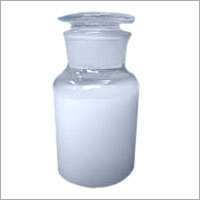
Tell us about your requirement

Price:
Quantity
Select Unit
- 50
- 100
- 200
- 250
- 500
- 1000+
Additional detail
Mobile number
Email

More Products in Industrial Chemical Category

Inorganic Chemicals
Properties : High purity, stable under normal conditions, noncombustible
Storage : Other, Store in a cool, dry, wellventilated area away from incompatible substances
Structural Formula : Refer to molecular formula representation (e.g., for Ammonium Chloride: NH4Cl)
Usage : For laboratory use, industrial manufacture, research, and chemical analysis
Ingredients : Pure inorganic compound, example: Ammonium Chloride
Density : 1.527 Gram per cubic centimeter(g/cm3)
Amyl Chemicals
Properties : Flammable volatile and may cause irritation upon contact
Storage : Store in a cool dry place away from direct sunlight, Other
Structural Formula : CCCCCOH
Usage : Commonly used in the food fragrance and chemical industries
Ingredients : Primarily comprised of namyl alcohol
Density : 0.814 Gram per cubic centimeter(g/cm3)

Paints Chemicals
Properties : High coverage, quick drying, resistant to weathering, excellent adhesion to substrates
Storage : Other, Store in cool, dry, and ventilated area, tightly sealed containers
Structural Formula : Mixture
Usage : Used on wood, metal, concrete, plaster, and other substrates
Ingredients : Pigments, binder, solvent, additives
Density : 1.25 Gram per cubic centimeter(g/cm3)

Specialty Chemicals
Properties : Highly volatile and flammable
Storage : Other, Store in a cool dry place away from direct sunlight
Structural Formula : CH3CH2OH
Usage : Industrial purposes in manufacturing processes
Ingredients : Propanone
Density : 0.79 Gram per cubic centimeter(g/cm3)


 Send Inquiry

54, JL & Part of 55 N, Industrial Area, Maxi Road,Ujjain - 456010, Madhya Pradesh, India

Mr. Saurabh Maru
(Partner)
Mobile :07313726422
 Send Inquiry
Developed and Managed by Infocom Network Private Limited.
 English
 Spanish
 French
 German
 Italian
 Chinese (Simplified)
 Japanese
 Korean
 Arabic
 Portuguese